

Spider-Man has a long comic book history, with countless stories published since the character debuted in 1962. Over the years, different creative teams have kicked off runs on long-running titles, relaunches, reboots, and brand-new series starring Spider-Man. Because of that, there are a lot of different entry points across the character’s 64-year history, some stronger than others. With so many places to start, I’ve put together a list of five Spider-Man comics that make great jumping-on points, including ongoing series, mini-series, and one-shot stories.
Note this isn’t about what are the best Spider-Man stories. That is a completely different list. This is about the comic books to get into exploring the iconic character even further after reading these comics.
SPIDER-MAN: LIFE STORY

Issues: Spider-Man: Life Story #1 – Spider-Man: Life Story #6
There’s no doubt that Stan Lee, Steve Ditko, and countless other creators have had iconic Spider-Man runs. But if you’re trying to experience those early 1960s and 1970s Spider-Man stories for the first time, the dialogue and storytelling style can be a little jarring. That’s where Spider-Man: Life Story works as a great entry point. It helps you get adjusted to that era of storytelling while also standing on its own as a fantastic modern comic book series.
In Spider-Man: Life Story, writer Chip Zdarsky and artist Mark Bagley tell Peter Parker’s story as if he, and the Marvel Universe as a whole, were allowed to naturally age from his debut in 1962. Each of the six issues focuses on a different decade in Peter’s life: the 1960s, 1970s, 1980s, 1990s, 2000s, and 2010s.
With that approach, Zdarsky and Bagley take some creative liberties, using what worked and what didn’t from the iconic stories told across each decade. Those choices fit because Peter and his supporting cast are actually allowed to grow older. It gives classic Spider-Man and Marvel Universe stories a fresh spin that makes sense for characters shaped by years of real-life experience. All of that makes Life Story a strong way to ease into the early Spider-Man comics from the era when the character first debuted.
ULTIMATE SPIDER-MAN: POWER & RESPONSIBILITY

Issues: Ultimate Spider-Man #1 – Ultimate Spider-Man #7
Maybe the freshest place to start is Brian Michael Bendis and Mark Bagley’s Ultimate Spider-Man series. When it debuted, Ultimate Spider-Man gave new fans a way into Spider-Man without having to worry about decades of continuity. Bendis and Bagley retold Spider-Man’s origin story and reintroduced his iconic cast by making them part of Peter Parker’s high school life.
Like many comics, Ultimate Spider-Man is still very much a product of its time when you read it more than 20 years later. Some of the dialogue does not hold up as well, but the core of what the series accomplishes absolutely does.
Its 160-issue run largely stands on its own, so you don’t have to worry about following other continuity. Having the same creative team throughout also keeps the direction of the characters consistent, which makes the transition from one story arc to the next feel natural. That long-term storytelling gives Peter, his supporting cast, and his villains room to grow in meaningful ways.
The high school element alone has inspired a lot of Spider-Man media to focus on that period of Peter’s life. There’s also the fact that Ultimate Spider-Man’s success influenced the mainline Spider-Man comics in major ways. You can even argue we never get something like Spider-Verse without the eventual debut of Miles Morales in Ultimate Spider-Man.
AMAZING SPIDER-MAN: BIG TIME
Issues: Amazing Spider-Man #648 – Amazing Spider-Man #651
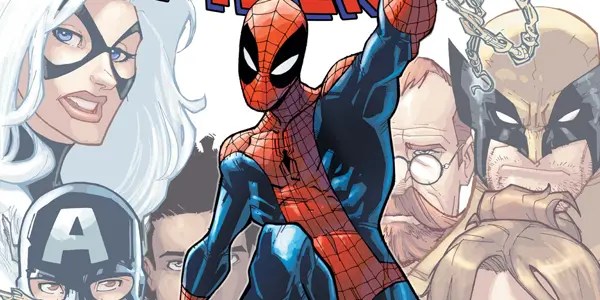
Marvel has relaunched Amazing Spider-Man with new volumes five times in the last decade, with each one meant to serve as a fresh entry point for new and longtime fans. Some of those relaunches work better than others. But if you’re looking to get into Spider-Man at the start of his modern era, the best starting point is the 2011 Amazing Spider-Man: Big Time direction.
Started by Dan Slott and Humberto Ramos in Amazing Spider-Man #648, the Big Time run defined a lot of elements that would shape the franchise moving forward. The biggest one was Peter Parker working for Horizon Labs. For the first time in a long time, we got to see Peter explore a career that used his scientific and engineering knowledge. It added to the refreshing direction that does a good job of using the basic understanding of Peter’s character as the core part of the direction.
A lot of what Slott and Ramos established through this direction are still being felt to this day. Peter’s time at Horizon Labs to Superior Spider-Man, and everything in between, are still being dealt with in some fashion. Then there is Slott’s Spider-Verse event that came out of this period that has had a broader impact Spider-Man’s franchise direction in and out of comic books.
THE KID WHO COLLECTS SPIDER-MAN & SPIDER-MAN: SPIDER-BITE

Issue: Amazing Spider-Man #248 and Friendly Neighborhood Spider-Man #6 (2019)
The final two are from two different comic books that came out decades apart. But even with the decades that separate them they tell similar narratives that make them be both something to check out.
First is one of the most iconic stories in Spider-Man’s history comes in the form of a back-up story that is Amazing Spider-Man #248, released at the beginning of 1984. The story, titled “The Kid Who Collects Spider-Man!”, by writer Roger Stern and artist Ron Frenz features Spider-Man visiting his biggest fan, a kid named Tim Harrison, who is battling leukemia. Spider-Man spends a meaningful amount of time talking with Tim, fulling his wish to meet his hero.
In the modern-day writer Tom Taylor and artist Juann Cabal delivered the Spider-Bite story in 2019’s Friendly Neighborhood Spider-Man #6. A story inspired by Amazing Spider-Man #248, Friendly Neighborhood Spider-Man #6 shows Spider-Man fulfilling Nathan’s Make-A-Wish to have an epic superhero team-up. Spider-Man works with the hospital staff and Nathan’s parent to create such a scenario.
Both stories show exactly why Spider-Man is such an important character. He connects with others like no other character. The endings of both stories hit on the emotional note that hits at the core of why Spider-Man is special.
For more opinions on anime, comic books, movies, and sports you can follow Kevin on Bluesky, Instagram, Threads, and Twitter/X.


